
Monday, April 28, 2014
Post War Era
Two major changes in the post war era is the Nuremberg Trials. These trials, put on my an International Military Tribunal, put 22 Nazi leaders on trial and charged them with waging war of aggression, and crimes against humanity. Out of the 22 people 12 were sentenced to death, and hanged on October 16th, 1946, then they were cremated at the Nazi camp, Dauchan. Another important event that happened in post war are was the United States occupation of Japan. Because Japanese leaders still wanted to fight, the United States took up a process to demilitarize Japan. They also helped to write up a Democratic Constitution in Japan.


Lasting Effects of Holocaust
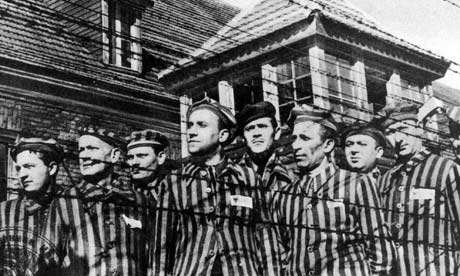
The effects of the Holocaust are strong, and are still heavy today. It was best summed up by Elie Wiesel saying, "Never shall I forget those flames which consumed my faith forever... Never shall i forget those moments which murdered my god and my soul and turned my dreams to dust...Never." This quote explains how the "showers" that were given to the jews didn't just kill his people, it killed his faith. Hitler nearly wiped out all of Judaism. Also it left a mark on Germany's history that they have dealt with and felt embarrassed for since its occurrence.

United States Involvement in World War II
The United States was brought into the war on very bad terms. Japan administered a surprise attack on the United States, this happened on December 7th, 1941 at Pearl Harbor. This bombing by Japan killed over 2,400 people and wounded 1,000 or more. The next day, the United States declared war on Japan. Because of the threat of another bombing due to Japanese Nationalistic opinions, President FDR started imprisonment camps on February 19th, 1942, for "Niesi" or American born Japanese people. During this time, the United States imprisoned 31,275 people, most of which were from American decent.


Battle of Stalingrad
The battle of Stalingrad was a huge turning point of World War II. It began on August 23rd, 1942, and it began with nightly bombing raids from the Luftwaffe. Considering that the city was named after the USSR dictator, Joseph Stalin, he demanded they protect the city at all costs. He said, "Not one step backward." It wasn't until November 19th till the Soviets began counterattacks. At this time, Germany had controlled over 90% of Stalingrad. However, the Soviets then trapped the Germans, and cut them off from their supplies. Once trapped, General Friedrich begged Hitler to retreat, he would not allow. Then on February 2nd, 1943, the frostbitten German army was forced to surrender to the Soviets.


Germany as a Military State
Germany as a military state, was very aggressive. Germany, who was under the command of Hitler, began a new military tactic called Blitzkrieg. This was a strategy that was nicknamed "lightning war" and was called this because of how fast it was. The idea of it was to have merciless bombing from the sky, and as soon as that ended, it followed with a large amount of troops moving in to overtake this land. The first time it was used was in the invasion of Poland. Also, Germany named their Air Force Luftwaffe. They had a very advanced Air Force, that was used in Blitzkrieg.

Introduction
World War II started because of many separate reasons. One of the original starts of the war was the nonaggression pact signed between Germany and USSR. They promised each other land that they were unable to fulfill. Germany started a new military tactic called Blitzkrieg, and then began destroying other countries. Then the United States got involved in the war because of Japan, and them bombing Pearl Harbor. However, Japan was later was no threat due to the United States dropping the Atomic Bomb.

Subscribe to:
Posts (Atom)